Cultivating Empire: William Jackson Hooker and the Glasgow Botanic Gardens
An archival study of a life and career in botany
A grant from the Society of Antiquaries of Scotland enabled Dr Mélanie Cournil (Sorbonne University) to pursue archival research into the life and work of the famous 19th-century botanist.
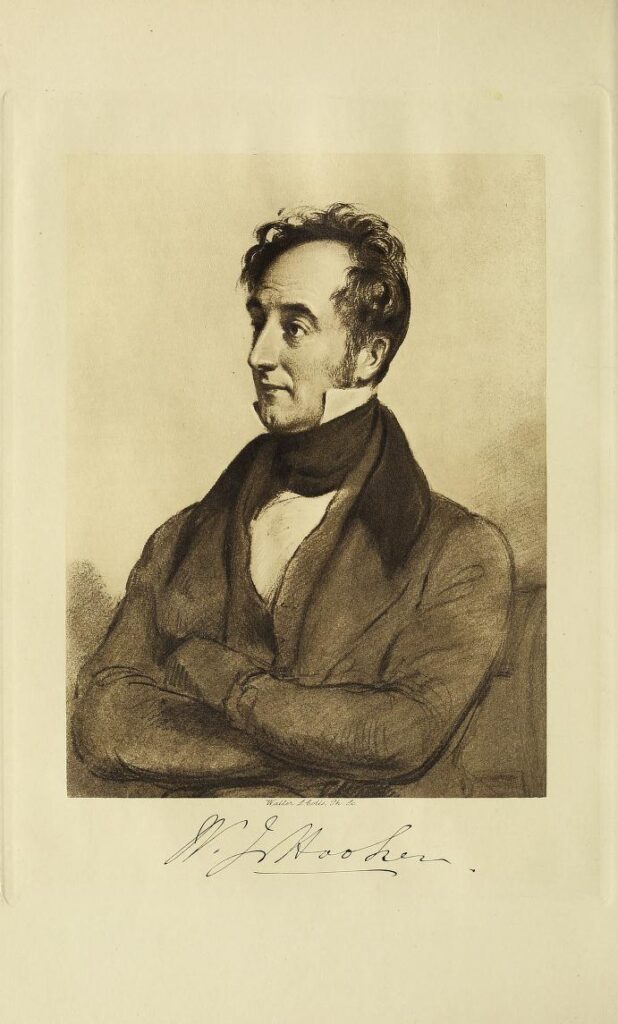
Portrait of William J. Hooker (in Joseph Dalton 1902 ‘A sketch of the life and labours of Sir William Jackson Hooker’, Annals of Botany 16)
The research project I have been developing for the past five years focuses on the imperial networks of William Jackson Hooker between 1820 and 1841. An English botanist from Norwich, Hooker had no academic background when he was appointed Regius Professor of Botany at the University of Glasgow and Director of the Glasgow Botanic Gardens in 1820. Yet over the years he gained significant social and scientific stature and later became a well-known figure among historians of science for his later career as Director of the Royal Botanic Gardens at Kew, a position he assumed in 1841 at the age of 55. Many academic books and articles have focused on his work in London, emphasising his pivotal role in establishing botany as a discipline in its own right and as a tool of imperial expansion. However, references to his two-decade tenure in Glasgow are often brief in the literature, relegating this formative period to little more than a footnote. This neglect is striking, as Hooker’s work in Glasgow proved crucial both to his scientific career and the development and growing prominence of the Glasgow Botanic Gardens.
As a highly popular university professor, Hooker expanded his scientific and diplomatic networks across Europe, North America and British colonial territories, as testified by his impressive professional correspondence (he received around 30,000 letters in his lifetime). Under his leadership, the Glasgow Botanic Gardens flourished and became a key site for the circulation of botanical knowledge and imperial connections.
The lack of academic research on Hooker’s early career mirrors the gap in scholarship on the Glasgow Botanic Gardens themselves, the institution through which he developed much of his scientific practice and networks during his years in Scotland. While recent studies have examined Glasgow’s role in the Caribbean plantation economy, none have explored the connections between botany, imperialism and scientific authority in the Glaswegian context. Consequently, there is no comprehensive academic case study of the first Glasgow Botanic Gardens (1817-1841), an institution that existed at the intersection of political and economic interests, scientific discoveries, cultural innovation and imperial motives.
The articles and the book that will be published based on my findings aim to investigate a neglected chapter of Scottish history, one that has long been overlooked by both historians of science and historians of Scotland. Through these publications, I intend to analyse the scientific and imperial legacy of William Jackson Hooker’s Glasgow years, focusing on the role of the first Glasgow Botanic Gardens as a central site for the global circulation of botanical knowledge under his direction, from their creation in 1817 to their relocation to the West End of Glasgow in 1841. This project contributes to the on-going re-examination of Glasgow’s connections to the British empire, viewed through the lens of science.
A key aspect of my research involves the exploration of archival materials that have not been thoroughly examined, in part due to the sheer volume of William Jackson Hooker’s correspondence and the fragmented nature of the sources, which are scattered across various archival institutions. Examining these materials allows me to trace the imperial and social foundations of Hooker’s scientific work in Glasgow, and, by extension, of the Glasgow Botanic Gardens. Many individuals who were crucial to both Hooker’s rise to prominence and the success of the Gardens have been overlooked in the historical record. These include female botanists, collectors and illustrators – among them Hooker’s own wife – as well as indigenous plant collectors whose ancestral and local knowledge was essential to the circulation of botanical specimens, yet has been largely erased from historical narratives.
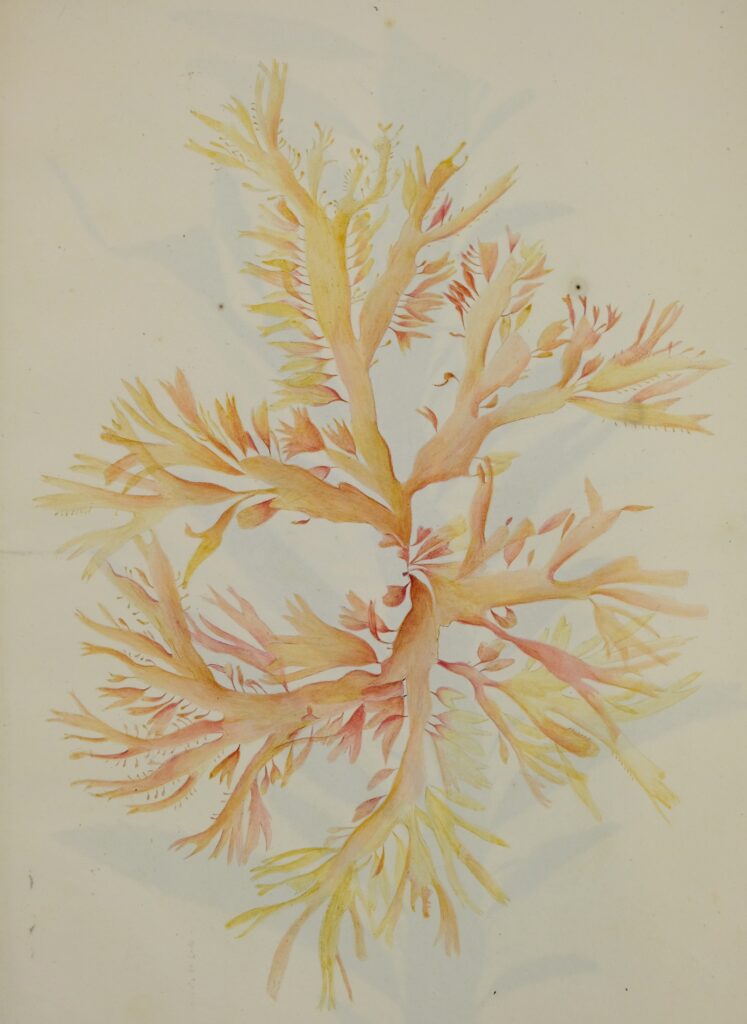
Pen and watercolour drawing of submerged algae by William J. Hooker. Image by Mélanie Cournil, courtesy of Kews Library and Archives.
The grant awarded to me by the Society of Antiquaries of Scotland enabled me to continue my archival research, that had previously led me to the Glasgow Mitchell Library, the University of Glasgow Library, Kew’s Library and Archives in London and the Norfolk Record Office in Norwich. My work to date has focused on the institutional archives of the Glasgow Botanic Gardens (held in the Glasgow Mitchell Library), on William Jackson Hooker’s professional correspondence (mostly preserved at Kew) and on his family connections in Norwich.
Because the archival material relevant to this project is dispersed across many institutions throughout the United Kingdom, my research involved many research trips in very different places. The Society of Antiquaries of Scotland research grant allowed me to continue my work in London, and to consult additional archives in Cambridge in late August-early September 2025. The archival materials I studied during that time focus primarily on William J. Hooker’s career, and on his relationship with his father-in-law, Dawson Turner, a fellow botanist who frequently acted as both mentor and confidant. A central component of my research consists in understanding how Hooker’s interest botany developed during his formative years, and how his immediate family circle supported his academic and scientific career. While Turner provided advice and facilitated key connections, Maria Hooker (née Turner) played an essential role by assisting with illustrations and acting as an amanuensis.
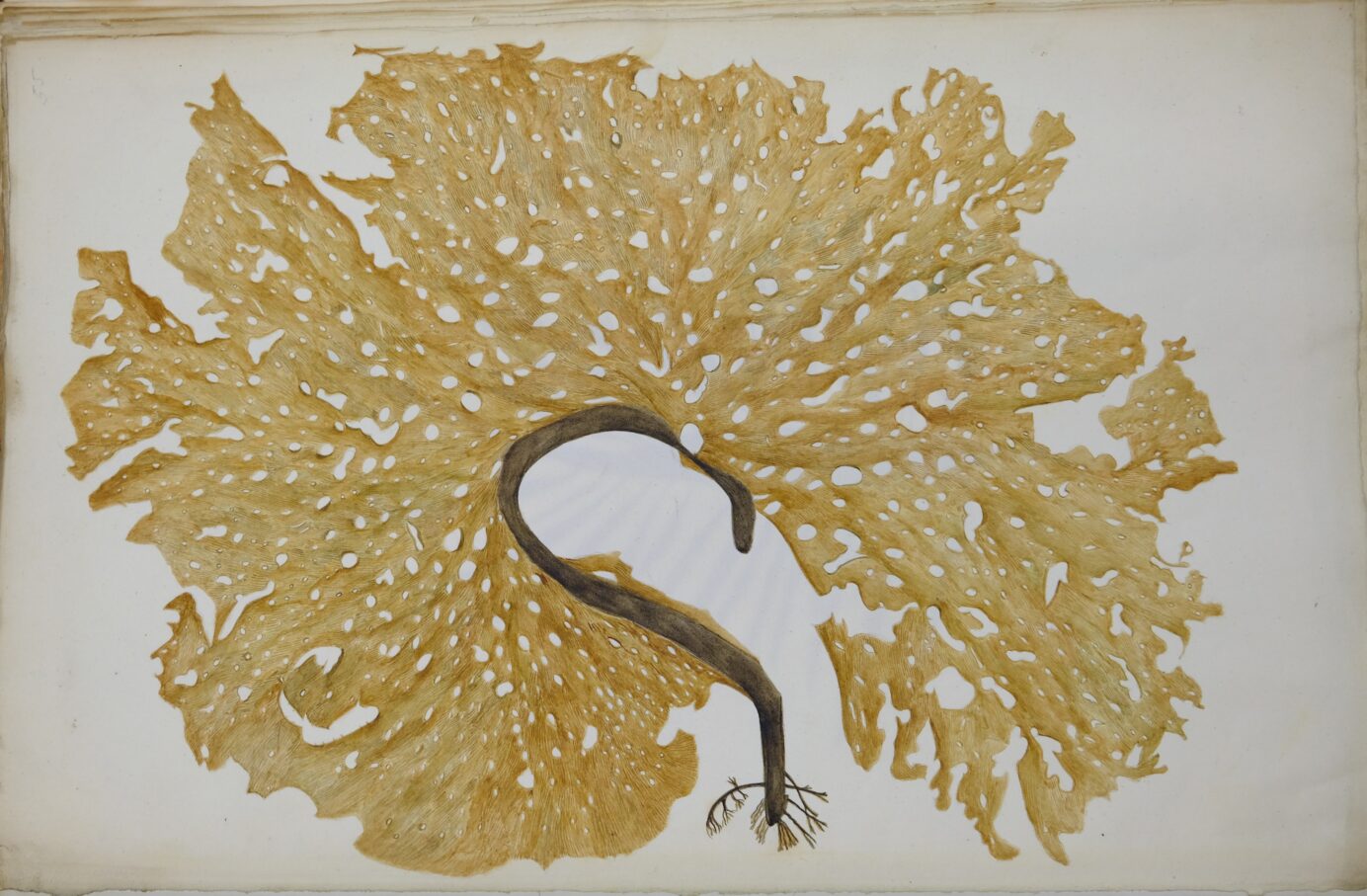
In London, I consulted several volumes from the Directors’ Correspondence archives, a collection dedicated to the former Directors of Kew beginning with Hooker, as well as William Jackson Hooker’s personal papers. These included two volumes of letters that are sparsely described in the catalogue (WJH/2/1 – Letters from Sir William Hooker, 1805 – 1832; WJH/2/1 – Letters from Sir William Hooker, 1833-1844). Together they contain hundreds of letters sent by Hooker to Dawson Turner, offering detailed insights into his everyday life, his recurring doubts about his position in Glasgow – he repeatedly expressed a desire to return to Norwich to be closer to his family – and his various professional projects, including his directorship of the Botanic gardens and his work as editor of botanical journals. I also examined a selection of Hooker’s artworks, as he was a highly skilled botanical artist. In particular, I discovered a series of watercolours of algae, which will form the basis of a future article on the different modes of representation of botanical specimens.
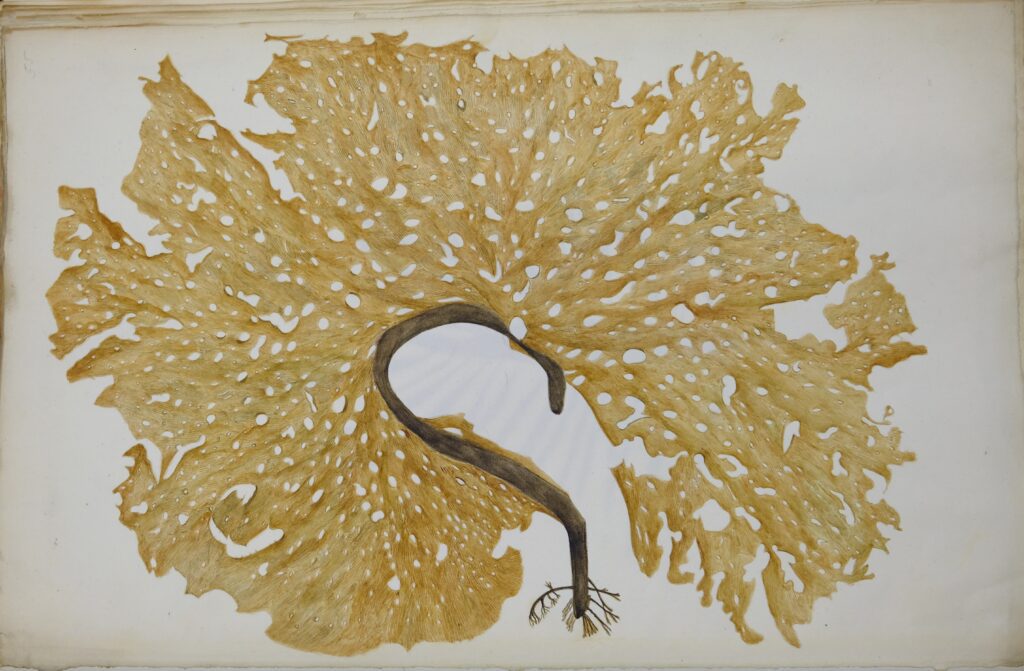
Pen and watercolour drawing of submerged algae by William J. Hooker. Image by Mélanie Cournil, courtesy of Kews Library and Archives.
The archives in Cambridge were held in two distinct locations: the Cambridge University Library Special Collections and the Wren Library. In the Special Collections, I consulted correspondence between Hooker and John Stevens Henslow, the director of the Cambridge Botanic Garden. These letters are central to my comparative approach, which examines how different botanic gardens were managed in the first half of the nineteenth century.
My presence at the Wren Library was motivated by my wish to locate the other half of the Turner-Hooker correspondence, namely Dawson Turner’s letters. I also hoped to identify personal papers belonging to Maria Hooker (née Turner), which are not held at Kew or, to my knowledge, in other major repositories. Consulting the material in person and discussing it with archivists proved essential, as the online catalogue is incomplete and only a limited number of letters are listed. While I located some of Turner’s correspondence – primarily concerned with professional matters – the relative absence of personal material suggests that his papers may be preserved elsewhere.
Regarding Lady Maria Hooker’s personal papers, I was somewhat disappointed, as I had hoped they would provide a counterpoint to her husband’s life and career as revealed through his personal correspondence. The manuscript catalogues indicate that these items are missing, though a detailed list helps to understand the scope of the gap. Consequently, I will need to continue tracing these materials elsewhere. A small consolation, however, came from Dawson Turner’s papers: many of his documents had been listed as missing since the 1960s, and I was able to inform the archivist of their actual location at Kew, thereby solving a small piece of the larger puzzle of the Hooker-Turner family archives.
The archives that I consulted have greatly helped my understanding of the professional relationship between William Jackson Hooker and Dawson Turner, and more importantly, provide a very personal and unfiltered perspective on Hooker’s views of his tenure at Glasgow University and as Director of the Botanic Gardens. These insights contrast with official reports and institutional records, offering a richer and more nuanced understanding of his early career – information that will be crucial for writing my future book.
I am extremely grateful to the Society of Antiquaries of Scotland for the financial support, which has been essential to advancing my research. I would also like to thank the archivists at Kew and the Wren Library for their invaluable assistance in locating important archival materials.