


News | Posted August 26, 2026
Society Funds New Archaeology Project Investigating Medieval Carved Stones
The archaeological fieldwork will help to record, analyse and preserve “one of Scotland’s most under-exploited, at-risk historical resources”, with future opportunities for the public to get involved.
Announced today, the grant from the Society will fund initial research in south-east Scotland as part of plans for a multi-year project documenting around 200 fragments of sculpture south of the Forth-Clyde line, most of which have not been studied for over a century.
Beginning in autumn 2026, the Sculpting Southern Scotland, AD 500-1100 project, coordinated by archaeologist Dr Christina Cowart-Smith FSAScot, seeks to collect images and data from these stones in order to shed light on the story of a historically contested border zone.
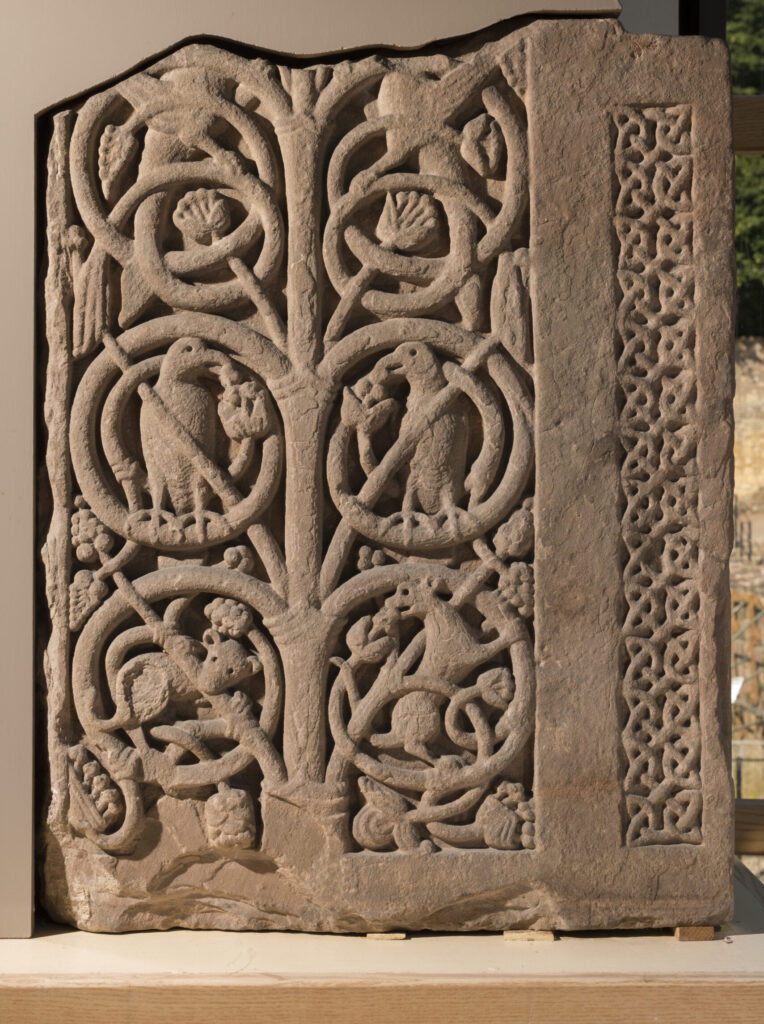
The carvings of birds, mice and other animals eating grapes on this 8th-century stone shrine panel from Jedburgh is a design often found in Northumbrian sculpture, and could tell us more about the relationships between early medieval kingdoms in today’s southern Scotland and northern England (© Crown Copyright HES)
The Challenge of Church Closures
Some of the surviving sculpted stones in southern Scotland are considered “at-risk” by Dr Cowart-Smith as many are housed in or adjacent to churches that are currently earmarked for closure and sale or have already been sold.
What happens to the historical objects associated with these buildings—including sculpted stones—when the churches change use, is uncertain.
Southern Scotland in the Medieval Period
The Sculpting Southern Scotland project will investigate sculptures made over a period of 600 years, between AD 500 and 1100, a time when the boundaries of various kingdoms shifted repeatedly.
There are few contemporary textual sources from early medieval south-east Scotland, which, according to Dr Cowart-Smith, makes this little-understood collection of sculpture so important in helping experts unpick not only what happened, but how monumental sculpture contributed to the creation of these kingdoms’ identities and their changing relationships with each other.
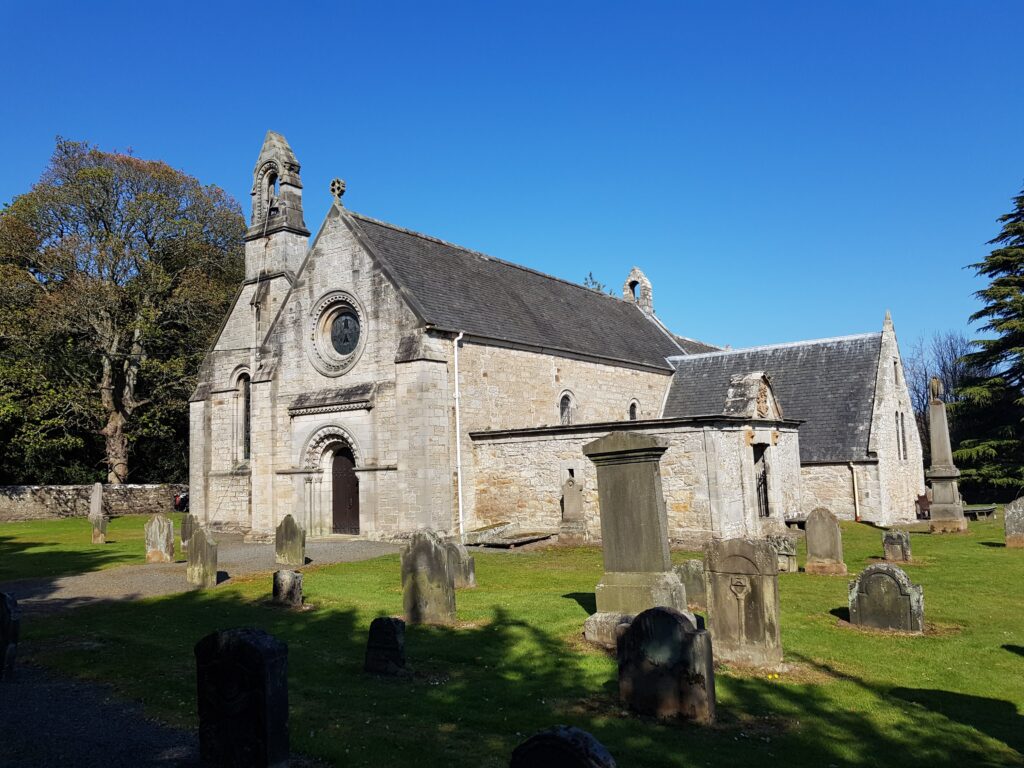
The early medieval ecclesiastical site at Abercorn in West Lothian was believed to have been abandoned sometime after AD 685, but Dr Cowart-Smith argues that Abercorn’s sculpture tells a different story of refashioning, rebranding, and repositioning from the early 800s AD (Credit: Rachel Pickering FSAScot)
The Project
Dr Cowart-Smith will visit carved stones across southern Scotland later this year, including at Abercorn, Jedburgh, and Morham in the South East.
The Society’s grant—together with funding from the Pictish Arts Society, and from the Hunter Archaeological & Historical Trust for a pilot study in south-west Scotland—will enable Dr Cowart-Smith to create 2D and 3D images of these sculptures and record details about their design.
This data will then be collated into an open access searchable digital database, inspired by Professor Katherine Forsyth HonFSAScot and team’s 2021-25 EpiDoc-based OG(H)AM project, with the aim of eventually covering the Lothians, Borders, Ayrshire, and Dumfries & Galloway.
In time, the database will allow for analysis and comparison, giving researchers the tools to answer key questions about how the sculptures were made and what they tell us about church and society in early medieval southern Scotland.
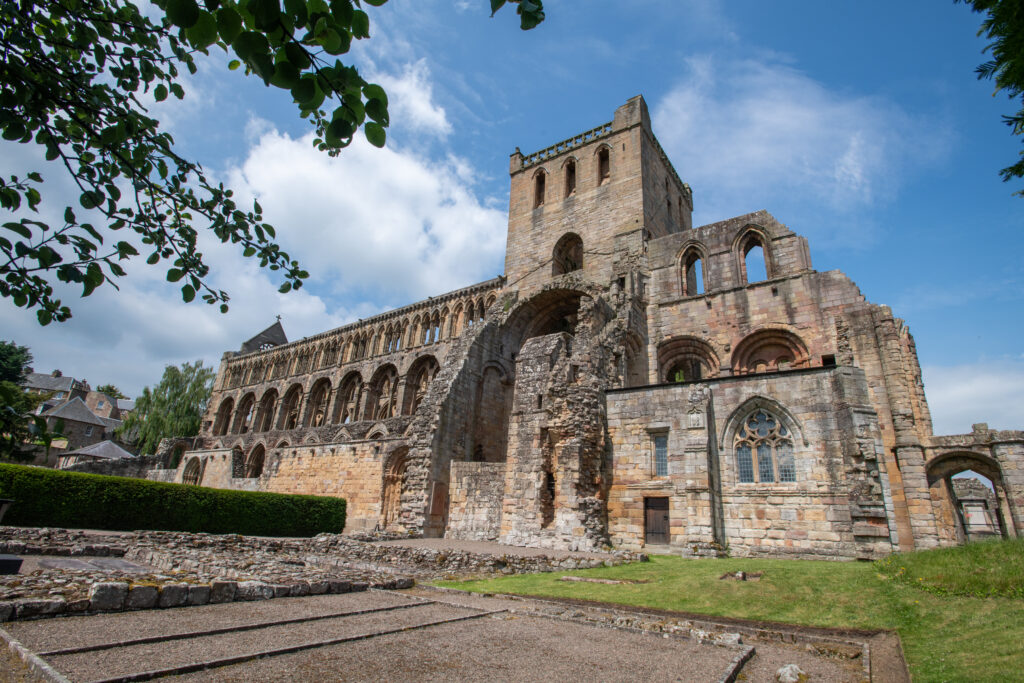
Dr Cowart-Smith is particularly interested in unpacking sculptural hands/motifs and the relationship of the Jedburgh sculptures to those at other pre Viking ecclesiastical centres which continued to thrive during the Viking age (© Historic Environment Scotland)
Dr Cowart-Smith, said:
‘Stone sculpture from early medieval southern Scotland is one of the country’s most under-exploited, at-risk historical resources. It presents a unique witness to a crossroads of cultures in the period between AD 500 and 1100, showing us how individuals and communities constructed identity, expressed political affiliation, organised worship, and negotiated differences.’
Dr Helen Spencer FSAScot, Head of Research at the Society of Antiquaries of Scotland, said:
‘At a time when many of the churches which house early medieval carved stones in southern Scotland are changing use, it is essential that these beautiful and intricate pieces of heritage are properly recorded and available for study in the future.
We are therefore pleased that the research grant awarded to Dr Cowart-Smith complements Research in Action on Church Heritage, a two-year initiative led by the Society and Scotland’s Churches Trust to record Scotland’s at-risk church buildings and their heritage value. ’
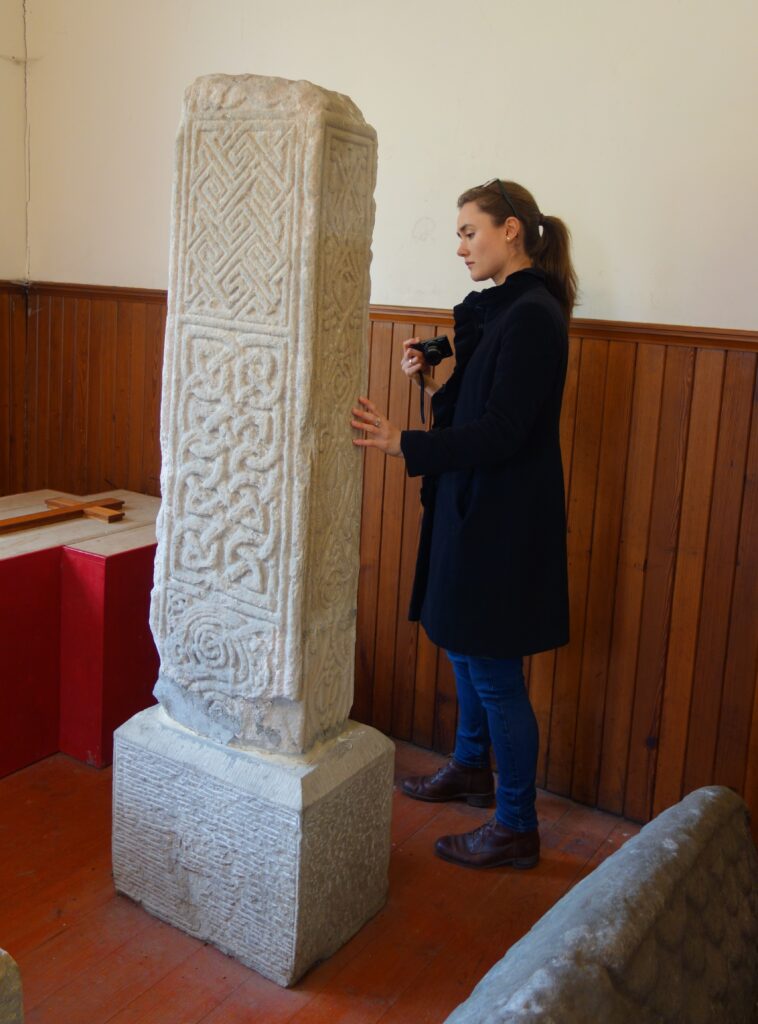
At Abercorn, Dr Cowart-Smith will work with local volunteers and digital imaging specialist Dr Megan Kasten FSAScot to co-produce 3D photogrammetric models of the site’s world-class high cross assemblage (Credit: Christina Cowart-Smith)
The Society, which is currently fundraising to establish Scotland’s first national heritage hub, supports high-quality research and publication relating to Scotland’s past by making several grants and awards twice each year.
This round awarded a total of £9,237 to nine projects researching various aspects of Scottish history or archaeology:
- Initial Fieldwork for Sculpting Southern Scotland – AD 500-1100 – supporting archaeological field research into medieval sculpted stones in South East Scotland
- The Origins and Significance of Ancient Greek and Etruscan Vases in Scottish Country Houses – supporting field research to identify what sub-types of vases appear in Scottish country houses, where they came from and how they got here, and integrate Scottish country houses into a broader project on vase collecting in country houses across Britain
- The Estate and the Country House in Scotland c1700 – A case study of Sir William Bruce’s Hopetoun House – supporting the publication of a new monograph exploring the development of the 18th-century Scottish country house
- Tracing Provisioning Networks in Early Medieval Dál Riata: A Multi-Isotope Analysis – funding a pilot programme of isotope analyses on cattle, sheep/goat and pig remains to generate the first bioarchaeological dataset of its kind for early medieval western Scotland
- Scottish Tea Merchants and the China Trade – funding archival research, a conference presentation and public engagement activities for a research project exploring Scottish tea merchants and the China trade
- The Politics of Highland Improvement: Annexation and the Landed Estate in Scotland – supporting the publication of a book which covers attempts to ‘improve’ thirteen Highland landed estates forfeited and then annexed by the Hanoverian state between 1747 and 1784
- From bone to bead – supporting a project to investigate how the production, use, and possible circulation of bone ornaments shaped identity and difference at the Neolithic settlement of Skara Brae
- Radiocarbon dating of excavated samples from Machrins Colonsay – funding radiocarbon dating of charcoal and faunal bone samples to help date a potential Iron Age ritual site on Colonsay
- Dating the first investigated Mesolithic site on the river Don at Boatley’s Farm, Kemnay, Aberdeenshire – funding radiocarbon dating to establish the chronology of a rare site of regional Mesolithic evidence from North Eastern Scotland
You can also read about many of our past Society-funded research projects here.
The Society is grateful to our thousands of Fellows across the globe, whose support enables us to distribute grants and coordinate projects to address urgent challenges in the heritage sector, including those facing Scotland’s churches. If you would also like to support our work, please consider applying today to help us empower and facilitate research and innovation, share knowledge of the past with everyone, and more ahead of the next deadline on 30 September 2026. Anyone with a passion for Scotland’s history and archaeology is welcome to apply.
The Society’s grants are also open to everyone, with the next submission deadline on 30 November 2026.